The global standard Africa’s developers are demanding in 2026 Something is happening across Africa that the rest of the world is only beginning to understand. In Nairobi, entire districts are being redesigned from the ground up. In Lagos, high-rise residential towers are rising faster than city…
The global standard Africa’s developers are demanding in 2026
Something is happening across Africa that the rest of the world is only beginning to understand.
In Nairobi, entire districts are being redesigned from the ground up. In Lagos, high-rise residential towers are rising faster than city planners can update their maps. In Accra, Dar es Salaam, and Abidjan, commercial developments that would have taken a decade to plan are breaking ground in months. The African construction boom is not a forecast anymore. It is happening right now and it is moving fast.
But speed without the right foundation is just expensive risk.
The Gap Between Ambition and Reality
Africa’s construction sector is projected to exceed $1 trillion in annual output before the end of this decade. Governments are investing in infrastructure. Private developers are committing capital at scale. And yet, one problem keeps slowing projects down, inflating budgets, and damaging reputations: the wrong materials.
Not counterfeit. Not visibly substandard. Just not good enough for what the project actually demands.
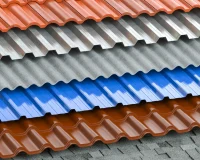
A tile that chips after two rainy seasons. A roofing sheet that warps under heat stress. A structural product that passes a local inspection but fails an international audit six months later. These are not hypothetical scenarios. They are the real stories behind delayed handovers and broken client relationships across the continent.
The question developers, contractors and procurement teams are now asking is simple: where do materials that actually perform come from?
What the Best Projects Have in Common
Across Africa’s most successfully completed large-scale developments hospitality, residential, commercial, infrastructure a pattern emerges when you look at the supply chain.
The materials share three characteristics:
- International certification. ISO standards, CE marking, or country-specific conformity approvals are not bureaucratic boxes. They are the difference between a product that was tested under controlled conditions and one that was not.
- Consistent quality across batches. A single sample that looks good is easy to find. A supplier who delivers the same specification on the third container as on the first that is rare, and that is what finished projects are built on.
- Export-ready documentation. In markets like Nigeria, Kenya and Morocco, arriving at port without the correct conformity certificates does not slow clearance. It stops it entirely. The best materials come with paperwork as precise as the product itself.
These are not premium features. In 2026, they are the baseline that serious developers demand.
Why Turkey Has Become Africa’s Most Trusted Source
Over the past decade, Turkish building materials have quietly become the backbone of some of Africa’s most ambitious projects. The reasons are not accidental.
Turkish manufacturers operate under EU-adjacent standards, producing ceramic tiles, roofing systems, sanitary ware, doors, and structural materials that meet international certification requirements without the European price premium. The logistics infrastructure connecting Istanbul to Mombasa, Lagos, Dar es Salaam and Casablanca is mature, well-tested, and built for volume.
But beyond logistics and certification, something else has made Turkish suppliers the preferred choice for African developers: reliability. They deliver what they say they will deliver. On time. With the right paperwork. At the agreed specification.
In a market where broken promises have become almost expected, consistency is the most competitive advantage a supplier can offer.
The Standard Has Changed
Three years ago, sourcing internationally certified building materials for an African project was considered a premium decision something reserved for flagship developments with international financing. Today it is the default expectation of any serious procurement team.
Buyers in Nairobi ask about KEBS certification before they ask about price. Developers in Lagos have learned often the hard way what happens when SON documentation is incomplete. Contractors across East and West Africa are building supplier relationships not around the lowest quote, but around who has never let a project down.
The market has matured. The buyers have matured. The only thing that should keep pace now is the supply chain.
What This Means for Your Next Project
If you are sourcing materials for a development anywhere in Africa right now, the most important question is not what is cheapest. It is what will still be performing in ten years and what will clear customs without a three-week delay.
The answer, increasingly, starts in Turkey and ends on site on time, certified, and ready to build with.
Power International Export supplies ISO-certified building materials across 12+ African markets. Full export documentation, pre-shipment inspection, and dedicated logistics support included as standard.
Power International Export
Don’t let supply chains
stall your next project.
Certified roofing, tiles, sanitary & structural materials — delivered across 12+ African markets with full export documentation.
Useful for your buying team?
Share or save this guide before the next supplier comparison.