Membrane waterproofing is a barrier layer sheet, roll, or liquid-applied installed on roofs, foundations, and below-grade structures to block water penetration before it reaches the structural material underneath. For B2B buyers sourcing in volume, the harder question isn’t what a membrane does, but which type, thickness,…
Membrane waterproofing is a barrier layer sheet, roll, or liquid-applied installed on roofs, foundations, and below-grade structures to block water penetration before it reaches the structural material underneath. For B2B buyers sourcing in volume, the harder question isn’t what a membrane does, but which type, thickness, and supplier route actually holds up once the material leaves the warehouse and reaches a real job site in a different climate than it was tested in.
What Counts as a “Wholesale” Membrane Order?
Retail listings sell membrane by the roll or the sample square. Wholesale pricing structures kick in at the pallet or full-truckload level for most manufacturers, and at the container level for suppliers exporting internationally. This distinction matters because a supplier’s advertised “bulk discount” pricing tier is often still built around a domestic, single-pallet buyer not a distributor or contractor placing repeat, multi-project orders. Confirming where your order volume actually sits on a supplier’s pricing scale, before requesting a quote, saves a round of renegotiation later.
Main Types Sold in Bulk
Not all waterproofing membrane products behave the same way, and the type dictates both application method and realistic bulk pricing:
| Membrane type | Application method | Typical use case | Bulk packaging |
|---|---|---|---|
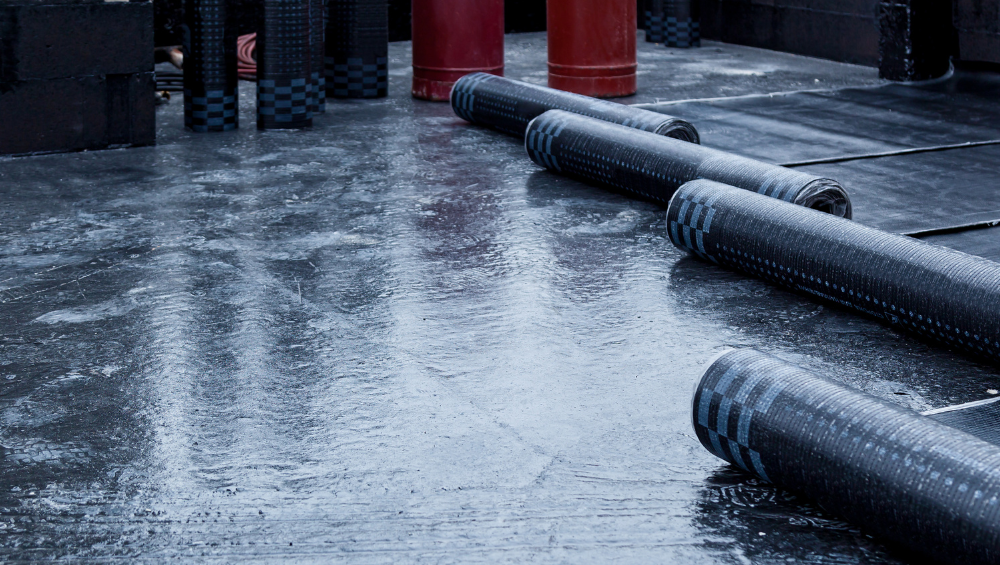
| Bitumen / APP-modified (torch-on) | Heat-welded with a torch | Flat roofs, below-grade, high-durability projects | Rolls, palletized |
| Self-adhesive (peel-and-stick) | Cold-applied, no torch needed | Retrofit work, sites where open flame isn’t permitted | Rolls, palletized |
| HDPE / PVC sheet | Mechanically fastened or loose-laid | Foundations, basements, tunnels | Rolls, crated |
| Liquid-applied | Rolled or sprayed on | Irregular surfaces, detailing around penetrations | Drums, pails |
Torch-on bitumen membranes remain the most commonly exported in bulk for large commercial and infrastructure projects, largely because they tolerate a wider temperature range during storage and transit than liquid-applied products do.
How to Evaluate a Supplier Before Committing to Volume
Rather than judging suppliers by name recognition, the same criteria apply regardless of origin:
- Thickness and reinforcement specs disclosed upfront — membrane is typically rated in mil or mm thickness, and reinforced versions (polyester or fiberglass mat) should be labeled as such, not left ambiguous.
- Compliance documentation — ASTM, EN, or equivalent regional test certificates for tensile strength and water penetration resistance, available on request before the order, not after a dispute.
- Sample-before-bulk policy — a supplier willing to send a cut sample for tearing, folding, and heat testing before you commit to a container is signaling confidence in their own product.
- Storage and shelf-life guidance — bitumen-based rolls have a realistic shelf life when stored upright and out of direct sun; a supplier who can’t tell you this hasn’t thought past the sale.
- Batch consistency across a large order — ask whether a multi-pallet order ships from a single production batch or several, since minor formulation differences across batches can affect adhesion consistency.
Comparing Sourcing Routes
| Sourcing route | Typical MOQ | Price per unit | Lead time | Best suited for |
|---|---|---|---|---|
| Local distributor | Low (single pallet) | Highest | Fast, days | Small repair jobs, emergency work |
| Regional wholesale distributor | Medium (multi-pallet) | Mid-range | 1–2 weeks | Contractors running several active sites |
| Direct manufacturer / export supplier | High (often container-based) | Lowest before logistics | 3–6 weeks depending on origin | Developers, distributors, cross-border importers |
The Climate Mismatch Most Buying Guides Don’t Mention
Almost every waterproofing membrane guide online is written around a temperate-climate installation — cool storage, moderate ambient temperature during application, predictable curing conditions. That assumption breaks down for buyers sourcing membrane for hot or humid climates, and it’s rarely addressed directly.
Torch-on bitumen membrane that performs well in a 15–25°C install environment can soften and become harder to handle cleanly above 40°C, which changes both application technique and crew training needs on-site. Self-adhesive membranes, in turn, can lose tack strength in extreme heat if the adhesive formulation wasn’t designed for it — something that only shows up as a problem months after installation, not during the sale. If your project sits in a hot or high-humidity region, it’s worth asking a supplier directly whether the product formulation was tested for that climate band, rather than assuming a spec sheet written for a temperate market applies unchanged.
Common Myths in Bulk Membrane Buying
“A higher price always means a higher-grade membrane.” Not reliably — pricing also reflects brand positioning, distribution markup, and country of manufacture, independent of actual tensile strength or reinforcement grade. The compliance certificate tells you more than the price tag does.
“Any membrane can be substituted for any other, as long as it’s waterproof.” No — a self-adhesive membrane rated for vertical foundation walls isn’t necessarily rated for a trafficked flat roof, and using one in place of the other is a common and costly mix-up in bulk procurement when purchasing decisions are made purely on price per roll.
“Sample testing is unnecessary if the supplier has good reviews.” Reviews reflect other buyers’ experience with other batches, in other climates. They’re a reasonable filter, not a substitute for testing the actual batch you’re about to bulk-order.
Practical Checklist Before Placing a Bulk Order
- Confirm membrane type matches the specific application (roof vs. foundation vs. detailing)
- Request thickness, reinforcement, and compliance documentation in writing
- Ask for a physical sample before committing to full container quantities
- Confirm the product’s tested temperature and humidity range against your project’s climate
- Verify whether the full order ships from a single production batch
- Clarify storage and shelf-life guidance for the transit and stacking period ahead
FAQ
What is membrane waterproofing? It’s a method of blocking water penetration using a continuous barrier layer — sheet, roll, or liquid-applied — installed over a roof, foundation, or below-grade surface, rather than relying on the base material’s own water resistance.
What is the difference between waterproofing and a membrane? Waterproofing is the broader goal; a membrane is one method of achieving it. Coatings, sealants, and drainage systems are other waterproofing methods that don’t involve an installed membrane layer at all.
Which type of waterproofing membrane is best? There isn’t a single best type — the right choice depends on the application (roof, foundation, or detail work), whether open-flame installation is permitted on-site, and the climate the project sits in. Matching the type to the use case matters more than picking a “top-rated” product.
Can a waterproofing membrane be installed without a professional? Self-adhesive membranes are more accessible for smaller DIY-scale jobs, while torch-on bitumen membrane requires trained installation due to the open-flame application method and welding technique needed for a watertight seam. For bulk commercial orders, installation is typically handled by trained crews regardless of membrane type.
Does a higher price always mean better waterproofing performance? Not necessarily — price often reflects brand and distribution costs more than raw material grade. Checking the compliance certificate and reinforcement spec is a more reliable indicator than price alone.
Useful for your buying team?
Share or save this guide before the next supplier comparison.