TL;DR: A reliable bulk rebar order starts with a complete bar schedule, the project standard, steel grade, diameters, lengths, quantity by size, weight basis and required inspection documents. Compare every quotation on the same Incoterm and the same theoretical or actual weight basis. Before payment, confirm mill…
Define the Project Specification Before Contacting Rebar Suppliers
Do not begin an RFQ with only a total tonnage. Two orders described as “500 tons of rebar” can require different grades, diameters, lengths, testing and loading plans. The supplier needs a bar schedule or a structured quantity list that separates every diameter and length. State the governing project standard exactly as it appears in the drawings or technical specification.
Your request should identify the delivery country, intended use, steel grade, nominal diameters, standard lengths, permitted tolerances and any third-party inspection requirement. If substitute standards or grades may be accepted, ask the project engineer to approve them before ordering. A commercial similarity between two grades is not a technical approval.
- Project name, destination and expected delivery window
- Required standard and steel grade
- Diameter-by-diameter quantity in metric tons
- Standard or project-specific bar lengths
- Permitted weight, dimensional and mechanical tolerances
- Required certificates, tests and inspection points
Check Diameter, Length and Unit Weight
Diameter and length control affects both structural compliance and commercial quantity. Ask the supplier to show the unit-weight calculation used in the quotation. Clarify whether invoicing is based on theoretical weight, mill scale weight or a verified actual weight. This point must also appear in the purchase order because it changes the number of bars received for a quoted tonnage.
| RFQ field | What to confirm | Why it matters |
|---|---|---|
| Diameter | Nominal size and permitted deviation | Controls design compliance and unit weight |
| Length | Standard length or cut length | Affects fabrication waste and container choice |
| Weight basis | Theoretical or actual | Prevents quantity disputes |
| Rib geometry | Standard-specific pattern and marking | Supports identification and specification checks |
| Quantity | Tons and estimated bar count by size | Improves receiving control |
For large orders, build a reconciliation sheet showing diameter, length, unit weight, bar count and total weight. The receiving team can then compare the packing list, bundle tags and physical delivery against one controlled document.
Choose the Right Supplier Type
A steel mill can offer direct production access but may require larger production lots and a narrower assortment per shipment. A trader may consolidate different diameters or mills, while an export partner can coordinate documentation, inspection and logistics. The right model depends on order size, delivery schedule and the number of products being combined.
Wholesale buyers should assess the complete supply chain, not only the company issuing the invoice. Ask who manufactures the steel, where the goods will be loaded, whether mixed mills are permitted and who is responsible for document consistency. TPI’s construction materials supplier guide explains how to compare sourcing partners across commercial and operational criteria.
Verify Mill Certificates, Heat Numbers and Traceability
Traceability should connect the physical bundles to production and test records. Request a sample mill test certificate before placing the order so the project team can confirm the document format and reported properties. Final certificates must correspond to the supplied heats and grades, not merely represent a similar previous shipment.
Bundle tags should remain legible through loading and delivery. They normally need enough information to reconcile the product, diameter, grade, heat or batch reference and bundle weight with the packing list. If independent inspection is required, define the witness, hold and release points before production or allocation. Retrospective inspection cannot always reconstruct missing traceability.
- Manufacturer and production location
- Applicable grade and product standard
- Heat or batch identification
- Chemical and mechanical test results required by the project
- Bundle references matching the packing list
- Inspection report and loading photographs when contracted
Compare Rebar Prices on the Same Commercial Basis
Wholesale rebar prices move with raw-material costs, production availability, diameter mix, order size, payment terms and freight. A quote that is cheaper per ton may become more expensive after inland transport, inspection, port charges or inefficient loading are added. Ask every bidder to use the same currency, validity period, Incoterm, destination and weight basis.
Separate the product value from logistics and optional services. The quotation should show whether cutting, special bundling, inspection, certificate legalization, loading supervision or marine protection is included. For a broader view of import stages and documents, use the guide to importing construction materials from Turkey.
Plan Bundling, Loading and Weather Protection
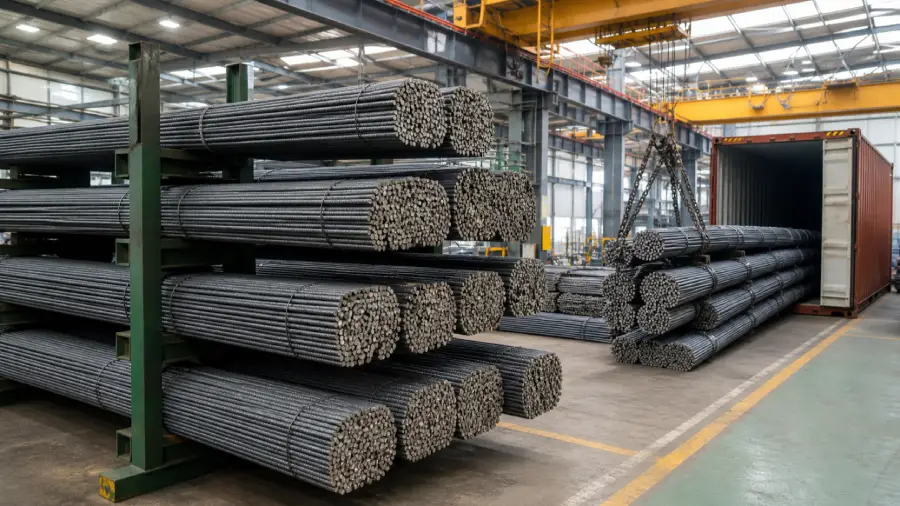
Rebar is dense cargo, so the shipment plan is governed by weight distribution, handling equipment, bundle length and route restrictions. Confirm whether the selected container or breakbulk method can accept the bar length and gross weight. The loading plan should protect the container floor, distribute weight safely and leave practical lifting points at destination.
Surface oxidation risk depends on storage time, exposure and voyage conditions. Agree where the goods will be stored before loading, how bundles will be separated from standing water and whether additional protection is required. Packaging must not hide bundle tags or make safe unloading harder. TPI’s international logistics services page outlines support that can be coordinated alongside material sourcing.
Watch for Supplier Red Flags
- The quotation omits the mill, grade or governing standard.
- One certificate is presented as proof for material from different heats.
- The supplier will not state whether billing uses theoretical or actual weight.
- Bundle tags and packing-list references cannot be reconciled.
- The price is valid but freight, inspection and handling assumptions are undefined.
- Substitution is allowed without written buyer or engineer approval.
- The claim procedure for shortages or rejected material is absent.
A red flag does not always mean the supplier is unsuitable, but it does mean the issue must be resolved in writing before payment or production.
Rebar RFQ Checklist
- Attach the approved bar schedule and project specification.
- List grade, standard, diameter, length and tonnage separately.
- Define theoretical or actual weight as the commercial basis.
- Request a sample mill certificate and bundle-tag format.
- State inspection, testing and document requirements.
- Request production, allocation and loading lead times separately.
- Fix the Incoterm, port, currency, validity and payment terms.
- Request the loading plan, bundle weights and estimated container count.
- Define tolerances and the non-conformity claim process.
- Compare the complete landed-cost structure, not only price per ton.
Frequently Asked Questions
What information do rebar suppliers need for an accurate quote?
They need the standard, grade, diameter-by-diameter quantities, lengths, weight basis, destination, delivery timing, inspection requirements and preferred Incoterm. A bar schedule is better than one total tonnage.
What is the usual MOQ for a bulk rebar order?
There is no universal MOQ. It depends on the mill, grade, diameter mix, production schedule and whether stock allocation or new production is required. Ask for the MOQ by diameter, not only per order.
Should a buyer use theoretical or actual weight?
Either can be used if the contract defines it clearly and the project permits it. The quotation, invoice, packing list and receiving calculation must follow the same agreed basis.
What is a mill test certificate?
It is a production-related document reporting identification and test information for the supplied material. Buyers should confirm that final certificate references match the physical bundle and heat identifiers.
Can different rebar grades be substituted?
Not based on a supplier’s commercial judgment alone. Any substitution should be reviewed and approved in writing by the responsible project engineer or specification authority before supply.
How can buyers check the quantity delivered?
Reconcile certified scale information or the agreed theoretical calculation with the packing list, bundle weights, bar counts and receiving records. Define the permitted shortage tolerance in the purchase order.
Is a sample useful for rebar procurement?
A physical sample may help with markings and geometry, but it cannot represent every production heat. Traceability, current test documents and any contracted inspection remain essential for the final shipment.
How should rebar be protected during shipping?
The method depends on route and contract requirements. At minimum, plan dry storage, controlled exposure, secure bundling, readable tags, suitable dunnage and a loading arrangement that permits safe unloading.
Which Incoterm is best for importing rebar?
No Incoterm is always best. Choose according to the buyer’s freight capability, destination, insurance approach and need for supplier coordination, then compare quotes using the same term.
How can a buyer start a project-specific rebar request?
Prepare the bar schedule, technical specification, destination and delivery target, then request a project sourcing quotation with the required documents and commercial terms listed.
Useful for your buying team?
Share or save this guide before the next supplier comparison.