TL;DR: Diesel and industrial are not exact opposites: diesel usually describes the fuel or engine type, while industrial describes the generator’s duty level, build quality, controls, and application. A buyer comparing a generator supplier should define kVA/kW demand, standby or prime use, site conditions, engine and…
TL;DR: Diesel and industrial are not exact opposites: diesel usually describes the fuel or engine type, while industrial describes the generator’s duty level, build quality, controls, and application. A buyer comparing a generator supplier should define kVA/kW demand, standby or prime use, site conditions, engine and alternator specs, spare parts, warranty, documents, and logistics before choosing between a diesel generator set and an industrial-duty power solution.
Understand The Diesel vs Industrial Question First
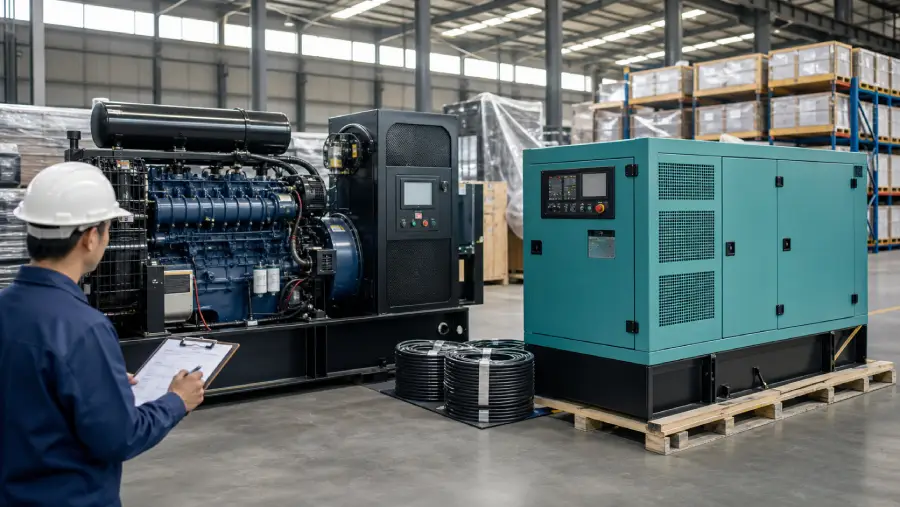
Many buyers ask whether they should source a diesel generator or an industrial generator. In practice, many industrial generators are diesel-powered. The real decision is usually between a standard diesel generator for backup use and a heavier-duty generator configured for industrial, construction, factory, hospital, mining, telecom, or infrastructure applications.
- Diesel generator: commonly chosen for reliable standby or prime power where diesel fuel is available.
- Industrial generator: designed for demanding environments, longer runtime, stronger control systems, and tougher installation needs.
- Portable generator: useful for small temporary loads, but not enough for most project or facility-scale power.
- Standby generator: starts during grid failure and may run for limited hours.
- Prime power generator: used as a regular power source where grid access is weak or unavailable.
If the generator is part of a wider electrical procurement package, review the wholesale electrical supply guide before finalizing the RFQ.
Match Generator Type To Use Case
The right generator depends on load profile, runtime, environment, noise limits, installation type, fuel access, and maintenance capacity. A supplier should ask for these details before quoting.
| Generator Option | Best Use | Buyer Checks |
|---|---|---|
| Diesel standby generator | Backup power for buildings, offices, hotels, and commercial facilities | Start system, ATS compatibility, tank size, noise canopy, service access |
| Diesel prime generator | Regular power where grid supply is unstable or unavailable | Runtime rating, cooling, fuel consumption, maintenance schedule |
| Industrial generator set | Factories, construction sites, infrastructure, telecom, hospitals | Engine brand, alternator, controller, protection systems, environment rating |
| Containerized generator | Large-scale, harsh, or remote sites | Ventilation, access doors, acoustic treatment, lifting points, transport route |
Size The Generator Before Asking For A Quote
Generator sourcing should start with load calculation, not price shopping. Oversizing increases purchase and fuel cost. Undersizing creates failures, voltage drops, overheating, and downtime. If the buyer does not have an electrical engineer’s load schedule, the RFQ should at least include the basic inputs.
- List all equipment that may run on generator power.
- Separate essential loads from non-essential loads.
- Confirm starting current for motors, pumps, compressors, elevators, or HVAC units.
- Define standby, prime, or continuous use requirement.
- Confirm voltage, phase, frequency, and local electrical standards.
- State altitude, ambient temperature, dust, humidity, and outdoor exposure.
- Define noise limits and fuel tank autonomy.
For project-wide procurement planning, use the construction materials supplier guide alongside the electrical scope.
Engine, Alternator And Control Panel Specs
A serious diesel generator supplier should quote more than kVA and price. The engine, alternator, controller, canopy, fuel tank, cooling system, and protection package determine long-term performance and maintenance risk.
- Engine brand, model, rated speed, fuel consumption, and emissions information where required.
- Alternator brand, insulation class, protection level, and voltage regulation.
- Controller features: alarms, shutdowns, monitoring, remote communication, and event logs.
- ATS compatibility for standby systems.
- Canopy type, acoustic level, weather protection, and access doors.
- Fuel tank size and runtime at defined load.
- Cooling system and derating factors for hot or high-altitude locations.
Supplier Qualification And Documents
Generator failure can stop a project, factory, hospital, telecom site, or commercial building. The supplier should be able to explain the technical configuration and provide documents that help the buyer’s engineer, customs broker, and maintenance team.
- Technical datasheet and model configuration.
- Test report or factory test record when available.
- User manual and maintenance schedule.
- Spare parts list and recommended consumables.
- Warranty terms and service contact process.
- Commercial invoice, packing list, origin document, and transport document.
For import workflow basics, see how to import construction materials from Turkey.
Spare Parts, Warranty And After-Sales Risk
Generator purchasing is not only a one-time hardware decision. Buyers should confirm parts access, filters, belts, coolant, oil requirements, controller support, and maintenance intervals. A low purchase price can become expensive if the site cannot get parts quickly.
- Ask for recommended spare parts for the first service period.
- Confirm whether consumables are globally available or supplier-specific.
- Check warranty conditions for standby vs prime use.
- Clarify who handles diagnosis if the generator is exported.
- Request commissioning guidance before first start.
Packaging, Shipping And Site Readiness
Generators are heavy, high-value equipment. Shipping method, lifting points, container fit, and unloading plan must be checked before production or payment. The buyer should also prepare the site before arrival.
- Confirm dimensions, gross weight, lifting points, and center of gravity.
- Check whether the generator ships in a container, on a flat rack, or by truck.
- Plan unloading equipment and route clearance.
- Prepare foundation, ventilation, exhaust route, grounding, and fuel storage area.
- Coordinate cables, switchgear, and ATS delivery with the generator schedule.
For freight coordination, TPI’s logistic services page can support the shipping discussion.
RFQ Checklist For Generator Buyers
A clean RFQ helps the supplier quote the right configuration instead of a generic model. It also helps the buyer compare suppliers fairly.
- Required kVA/kW, voltage, phase, and frequency.
- Standby, prime, or continuous use.
- Load list and motor starting requirements.
- Fuel preference and expected runtime.
- Indoor, outdoor, silent canopy, or containerized installation.
- Ambient temperature, altitude, dust, humidity, and noise limits.
- ATS, synchronization, remote monitoring, or control panel requirements.
- Spare parts, warranty, documents, and delivery port.
When the technical brief is ready, send it through the request a generator sourcing quote page.
FAQ
Is a diesel generator the same as an industrial generator?
No. Diesel describes the fuel or engine type. Industrial describes the duty level, application, durability, controls, and site requirements. Many industrial generators are diesel-powered.
How do I choose the right generator size?
Use a load calculation that includes running load, starting current, voltage, phase, frequency, and essential equipment. An electrical engineer should confirm final sizing for critical projects.
What is the difference between standby and prime power?
Standby generators run during grid outages for limited periods. Prime power generators are used as a regular power source and must be specified for longer runtime and tougher service conditions.
What should I ask a generator supplier before ordering?
Ask for kVA/kW rating, engine model, alternator, controller, fuel consumption, tank capacity, canopy details, warranty, spare parts, documents, shipping dimensions, and lead time.
Are industrial generators always more expensive?
They often cost more because they use stronger configurations, controls, protection systems, and packaging. The right comparison is total lifecycle cost, not only purchase price.
Can one generator power an entire construction site?
Sometimes, but the supplier needs the load list, starting loads, operating schedule, and site layout. Large sites may need multiple generators or staged power distribution.
What documents are needed to import a generator?
Common documents include commercial invoice, packing list, transport document, origin document if required, technical datasheet, and any market-specific compliance documents requested by the buyer or customs broker.
How important is spare parts availability?
It is critical. Filters, belts, controllers, sensors, and service items should be available within a realistic timeline. Lack of parts can make a cheap generator expensive to own.
Should I order cables and electrical components with the generator?
If the project scope is clear, coordinating cables, switchgear, ATS, grounding materials, and generator delivery can reduce delays. The electrical engineer should confirm compatibility.
Power International Export
Don’t let supply chains
stall your next project.
Certified roofing, tiles, sanitary & structural materials — delivered across 12+ African markets with full export documentation.
Useful for your buying team?
Share or save this guide before the next supplier comparison.