TL;DR: Start a project lighting order with an approved luminaire schedule, not a total wattage or fixture count. Define the application, required light output, distribution, color temperature, control method, electrical conditions, environmental exposure and evidence required by the destination market. Compare quotations using the complete luminaire,…
TL;DR: Start a project lighting order with an approved luminaire schedule, not a total wattage or fixture count. Define the application, required light output, distribution, color temperature, control method, electrical conditions, environmental exposure and evidence required by the destination market. Compare quotations using the complete luminaire, including driver, mounting parts, surge protection, emergency components and warranty procedure. Approve samples and project-specific photometric files before ordering, then confirm carton labels, spare units and shipment protection. Buyers can review TPI’s LED lighting product category while preparing the schedule.
Match Each Luminaire to Its Application
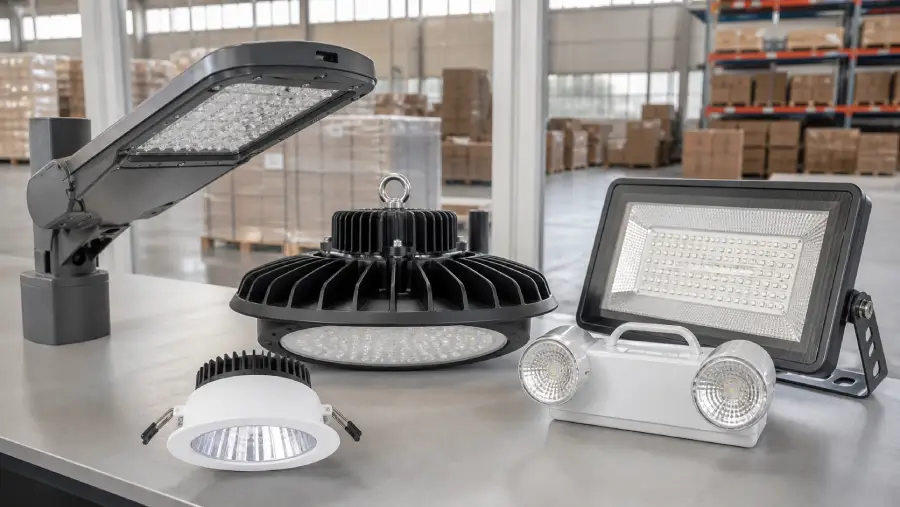
A street light, warehouse high bay, floodlight, downlight and emergency exit fitting solve different lighting problems. Do not substitute one because its wattage appears similar. Identify mounting height, illuminated area, operating hours, indoor or outdoor exposure, maintenance access and any control requirements for every fixture type.
The RFQ should connect each luminaire reference to a drawing or room schedule. For roads and external areas, include pole or bracket information and the intended distribution. For warehouses, provide mounting height, aisle layout and target working-plane criteria. For emergency lighting, define the required function, duration and project approval basis without asking the supplier to infer local rules.
- Luminaire reference, quantity and application
- Mounting position, height and fixing method
- Indoor, outdoor, dusty, wet or corrosive exposure
- Operating voltage, frequency and control method
- Required light output, distribution and color
- Project documents, tests and approval process
Compare Street, High-Bay, Flood and Emergency Lighting
| Luminaire type | Key RFQ inputs | Common buying risk |
|---|---|---|
| Street light | Road geometry, pole height, arm and optical distribution | Comparing wattage without a lighting calculation |
| High bay | Mounting height, aisle layout, beam and ambient conditions | Creating dark zones or excessive glare |
| Floodlight | Throw distance, aiming, beam and bracket | Using one beam for every façade or yard |
| Downlight | Cut-out, ceiling, glare, color and driver access | Ignoring ceiling and installation compatibility |
| Emergency fitting | Operating mode, autonomy, viewing and test method | Assuming one configuration fits every market |
Use this classification to create separate quotation lines. A supplier may offer several fixture families, but approval should be based on the proposed model and application rather than a general catalog statement.
Check Photometric and Electrical Specifications
Wattage describes input power, not the useful lighting result. Request rated luminaire output, efficacy, beam or distribution, color temperature, color rendering information and photometric data for the exact proposed model. Where a lighting design is required, ask for project files that correspond to the final optic, output and mounting arrangement.
Wholesale LED lighting suppliers should also state input range, frequency, power factor, driver details, dimming or control compatibility and surge-protection arrangement where relevant. Confirm whether quoted performance refers to the LED package or the complete luminaire. Procurement comparisons should use complete-luminaire figures on the same basis.
Review Housing, IP, IK and Thermal Design
The housing protects electrical and optical components and helps manage heat. Ask for body material, finish, diffuser or lens, gasket arrangement, cable entry and mounting hardware. The required ingress and impact protection depends on the site; specify the project value instead of selecting the highest label without considering installation details.
Thermal management affects stable operation. Request the declared ambient operating range and installation limitations for the complete fitting. A test result or rating should identify the product covered. An outdoor housing claim is not enough if the cable gland, connector or site mounting method creates an unprotected entry point.
Evaluate Drivers, Components and Spare-Part Strategy
Ask the supplier to identify the driver and other serviceable components in the offered configuration. Confirm whether the driver is replaceable, how access works and which spare items can be supplied with the project. If a specific control protocol or sensor interface is required, write it into the schedule and test the complete combination.
Warranty terms should explain duration, covered component, evidence required, remedy and responsibility for transport or labor. A long headline warranty is less useful than a practical claim procedure and available replacement units. For broader electrical procurement coordination, consult TPI’s wholesale electrical supply guide.
Request Samples, Reports and Project Approvals
Approve representative samples for each important fixture family. Check dimensions, finish, mounting, connectors, driver access, light color, visible flicker concerns, optics and carton contents. For high-volume projects, a mock-up area can expose glare, distribution or installation issues that a desk sample cannot show.
Document requirements vary by destination and project. Request the current technical sheet, installation instructions, photometric file and the test or conformity evidence named by the consultant or importer. Verify that model codes match across the quotation, sample, reports, labels and packing list. TPI’s construction-materials sourcing guide provides a wider supplier-document checklist.
Compare MOQ, Price and Landed Cost
Bulk LED lighting quotations can differ in driver, optic, housing, accessories, controls and packaging even when visible wattage is the same. Request an itemized offer by approved fixture reference. Confirm MOQ by model and finish, sample charges, production lead time, quotation validity, Incoterm and payment terms.
Add spare units, mounting accessories, inland transport, inspection, freight, insurance and destination costs before choosing a supplier. Carton volume can materially affect freight, especially for large high-bay or street fittings. The guide to importing construction materials from Turkey explains the wider shipment and document flow.
Plan Packaging, Labels and Receiving Control
Every carton should protect lenses, brackets, finishes and connectors from movement and impact. Request units per carton, carton dimensions, gross weight, pallet configuration and stacking limits. Large brackets or mounting kits must remain associated with the correct luminaire reference.
Use a receiving matrix that connects carton labels to the fixture schedule, building, zone or pole group. Agree whether spares will be packed separately. At inspection, sample cartons from different pallets and check identity, quantity, appearance, accessories and basic function using an agreed procedure.
LED Lighting RFQ Checklist
- Attach the luminaire schedule, drawings and application descriptions.
- Define mounting height, fixing, environment and operating hours.
- State required output, distribution, CCT, CRI and control method.
- List electrical, IP, IK, surge and ambient requirements.
- Request model-specific technical sheets and photometric files.
- Define sample, mock-up and approval procedures.
- Ask for driver information, spare units and warranty workflow.
- Confirm MOQ, lead time, validity, Incoterm and payment terms.
- Request carton, pallet and container-loading information.
- Define pre-shipment inspection and non-conformity handling.
Frequently Asked Questions
What information do LED lighting suppliers need for a quote?
They need the fixture schedule, quantities, applications, mounting conditions, lighting criteria, electrical requirements, control method, destination, documentation and commercial terms.
Is wattage enough to compare LED fixtures?
No. Compare complete-luminaire output, distribution, efficacy, color, driver, protection, thermal limits and project-specific photometric performance.
What is the MOQ for wholesale LED lighting?
MOQ varies by model, wattage, optic, finish, driver and production route. Ask for the minimum per approved reference and for the complete order.
Should project buyers request samples?
Yes. Approve representative samples and use a mock-up when mounting, glare, distribution or visual consistency is important to the project.
What is a photometric file used for?
It allows a lighting designer to model the proposed luminaire’s distribution and output. The file must match the exact model, optic and configuration quoted.
How should buyers select an IP rating?
Use the installation environment and project specification. Also check cable entries, connectors and mounting because the installed assembly must preserve the intended protection.
Which spare parts should be ordered?
That depends on serviceability and project scale. Consider complete spare fittings, drivers, mounting parts and control components identified for the approved models.
Can different LED products share one shipment?
Yes when carton dimensions, handling, route and commercial terms allow consolidation. Keep every model and accessory clearly separated and labeled.
How should warranty offers be compared?
Compare coverage, exclusions, required evidence, remedy, replacement availability and responsibility for transport or labor, not only the stated number of years.
How can a buyer request a project lighting quotation?
Send the luminaire schedule, drawings, technical requirements, destination and target delivery through TPI’s project quotation contact page.
Useful for your buying team?
Share or save this guide before the next supplier comparison.